Two Rivers Art Gallery
I visited Two Rivers Art Gallery on the first Monday after Barry McKinnon died. If you read poetry, or study English in Prince George, you will likely learn who Barry McKinnon is. I’ve read Barry McKinnon. I have a copy of The Circle which I read for a class, but the real reason I’m connecting McKinnon and Two Rivers despite the fact that I’ve had limited interaction, is that I’d like to believe art is alive here. So I’ll try prose, bare with me, it’s been a minute.
Cynicism
Art is dead, art is dying.
Not really, not anymore than the rest of us.
We are dying, the world is dying
Well yes but no more or less than our art, our selves.
Young people today don’t believe in the future
Do we, do we really?
Young people have climate anxiety.
Amidst ecological collapse? I’d be more worried if they didn’t.
This town sucks!
In a bunch of ways absolutely, what now?
There are no artists here, no scene!
There is, but if you don’t like them you can always become one, or import.
Art has changed, it’s worsened.
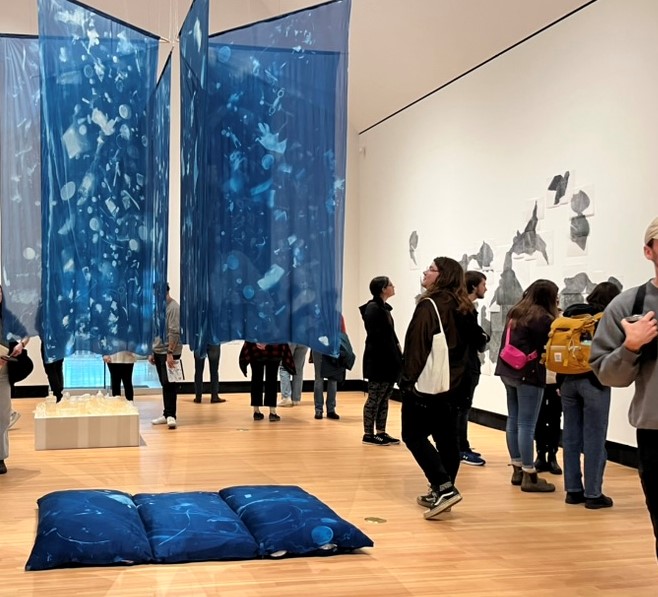
Did you know film photography has been the same process since humans figured out chlorophyll, and it still works essentially the same today? Here’s a stunning example:
The last time I did art “professionally” I went to Nelson, Art hippy capital of BC, or so they claim, despite their lack of housing, hostile architecture, and multiple police forces. But hey, they have Shambala. The week before my birthday, a couple days before I was completely out of money and had to return north, a few months before the first lockdown, I went to a poetry Jam, and I won. The kid from the north had the best poetry in a room of a dozen people and they gave me $20 to read for them again. An old poet woman in a funny hat told me it was modern, original, and striking, and she gave me a hug; I haven’t read since.
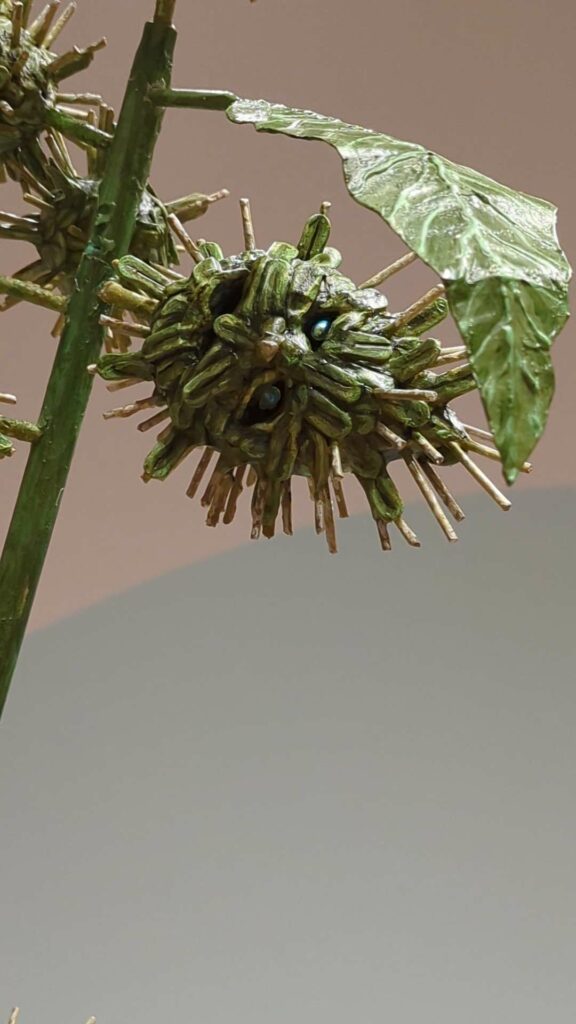
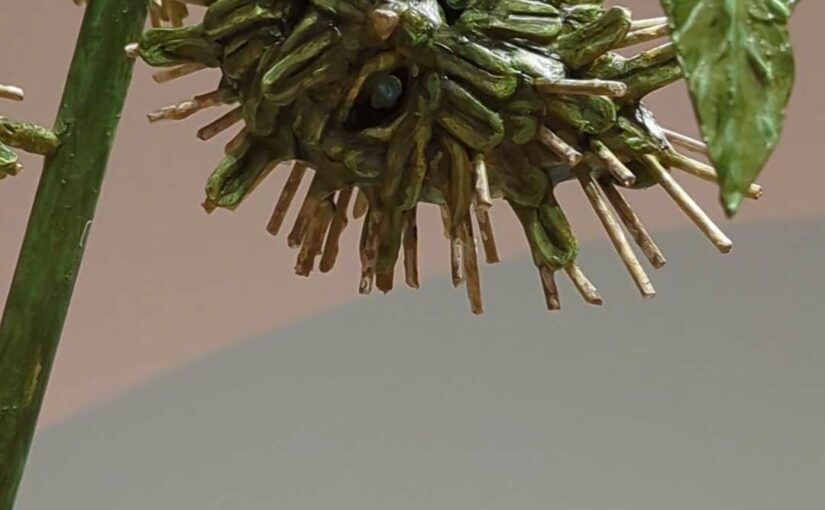
Two River’s current exhibit, like everything living and aware of its situation, is a stunning look at waste, loss, and our ongoing ecological collapse. None of the pieces really suggested the damage was stopped, or ending in time. No piece, at least for me, suggested that we’ll stop climate change at the last second. But how do we make pedagogy at the end of the world? Looking at Jude Griebel’s work I think it might be whimsy. When we become enveloped in wildfire smoke and dirty air, can we giggle under our gas masks? When buildings crumble can we smile at the greenery growing through the streets? When the rising oceans swallow our cities, can we visit the fish who make submerged luxury apartments home? When lights go out, will we be able to see the stars? I think that’s what this lil’ green fruit was telling me.